

HYROX sled pull: technique fixes, common mistakes and 4 workouts to get faster
Practical coaching cues and four ready-to-use workouts for recreational and ambitious HYROX athletes preparing the sled pull station
The HYROX sled pull can be a make-or-break station if you treat it like an afterthought. Better sled pull technique and targeted practice make the movement safer and much more efficient, so you spend less gas and keep your run pace intact.
Technique essentials, safe and efficient
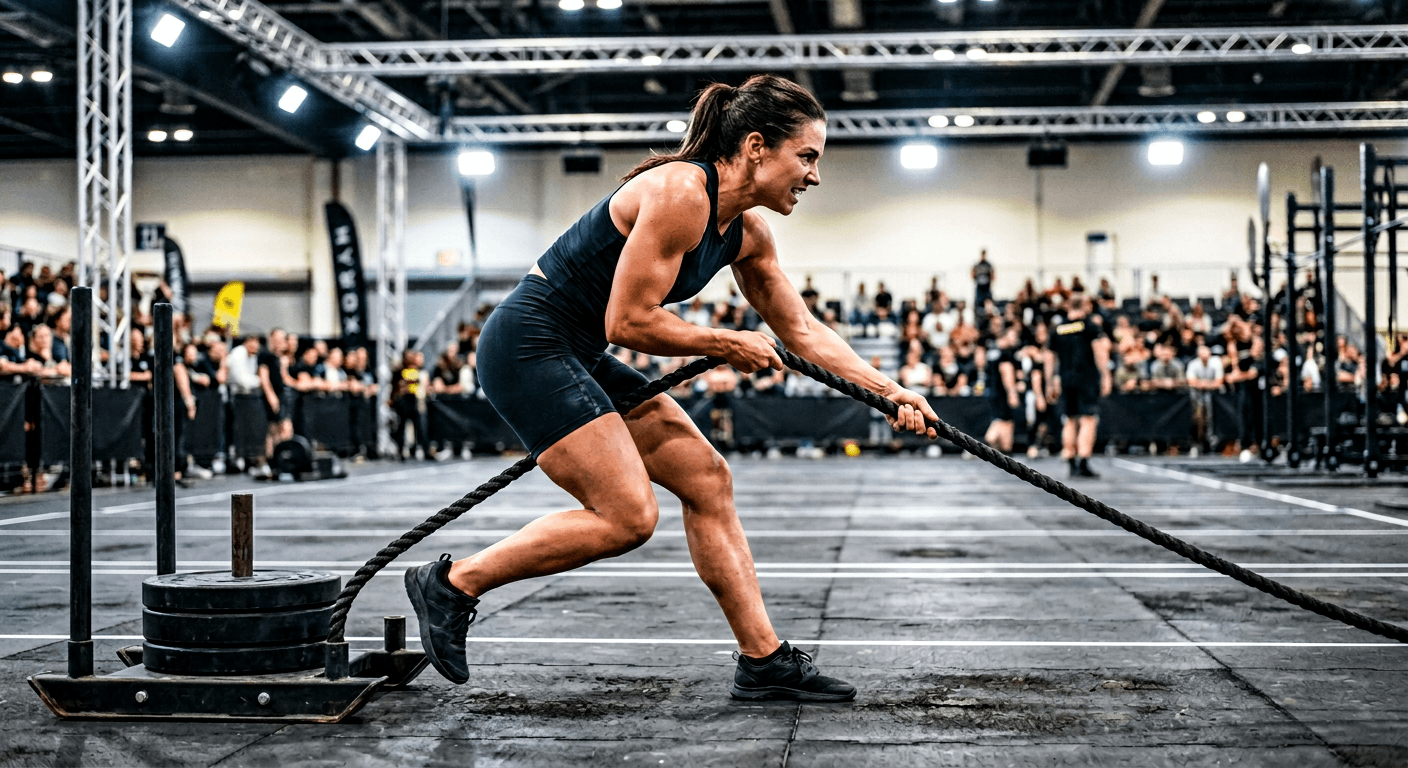
Focus on three simple lines: a solid base, a strong hip hinge, and a steady pull rhythm. Setup with feet roughly hip to shoulder width, toes pointed forward, and a slight stagger when you start pulling. Hinge from the hips so your chest stays tall and your shoulders sit over your hips. That creates a horizontal force path so your legs and glutes do the work, not your low back.
Grip the rope with alternating hands, keep the rope low and close to the body, and avoid reaching high and yanking. Drive with the leg you step onto, plant the foot firmly, then push the floor away while pulling the rope hand over hand. Maintain a steady cadence rather than short choppy tugs, and breathe rhythmically to avoid bracing and early fatigue.
Coaching cues to use on the go: "hips back, chest tall, pull with the legs," "step and drive, then haul the rope," and "steady rhythm, don’t yank." For sled pull technique drills, practice slow, controlled 10 to 15 meter pulls focusing on foot placement and full leg extension before adding load or speed. Demo image suggestions: side view showing lean and hip hinge, close up of alternating grip, and front view of staggered stance.
Common mistakes and how to fix them
Mistake 1, using the arms to do the work. Fix, cue leg drive first and practice pulling with a harness or body angle that forces the legs to move the sled. Mistake 2, collapsing the chest and rounding the back. Fix, practice hinge drills and keep a tall chest, think about bracing the core before each step. Mistake 3, short choppy steps and frenetic tugging. Fix, lengthen the stride slightly and match a steady hand-over-hand rhythm with each foot plant. Mistake 4, poor rope management and wasted motion. Fix, keep the rope low, pull into your hip line, and practice coiling or handing off in a controlled way at the end of each pull.
If you see "sled pull mistakes" in a training session, stop and run a slow set with no load, film a side view, and correct one issue at a time. Use the cue "stable base then pull" rather than overwhelming technique with multiple corrections.
Four targeted workouts (strength, power, tempo, race simulation)
- Strength focus
- Goal, build maximal force for short bursts.
- Prescription, 3 sets of the full station distance or 20 to 30 meters if you train outside event lanes. Load, 80 to 100 percent of your bodyweight on the sled or whatever feels like maximal, but you should complete the distance in 15 to 30 seconds. Rest, 3 to 4 minutes between sets.
- Coaching note, move deliberately, emphasize strong drives and full leg extension, keep torso rigid.
- Power focus
- Goal, improve explosive start and acceleration on the pull.
- Prescription, 6 sets of 10 to 15 meter sprints from a dead stop. Load, 50 to 70 percent of bodyweight. Rest, 90 to 120 seconds.
- Coaching note, focus on powerful first three steps, fast hand-over-hand rhythm and short ground contact.
- Tempo focus
- Goal, build sustainable sled pull pacing for race rounds.
- Prescription, 4 sets of the full station distance at a steady, controlled pace. Load, 40 to 60 percent of bodyweight. Rest, 2 minutes.
- Coaching note, maintain consistent cadence, practice breathing and avoid spikes in effort that ruin your run pace.
- Race simulation
- Goal, rehearse the station under fatigue and practice transitions.
- Prescription, 2 to 3 full station efforts at your planned race load and pace, preceded by a 1 to 2 kilometer run at race pace or a 5 minute interval that mimics race fatigue. Rest, simulate your race timing, for example 3 to 5 minutes between attempts if you are practicing multiple rounds.
- Coaching note, rehearse getting into position quickly after the run, manage rope and hand placement, and practice finishing under control.
How to choose loads, if you do not have exact sled weight guidance from a competition, pick loads relative to bodyweight and perceived effort. Strength sessions should feel heavy and slow, power sessions should feel explosive, tempo should be comfortably hard and controllable, and race simulation should mirror what you expect on race day. For all workouts, film a rep occasionally to check sled pull technique and make one correction per week.
Weekly placement and safety notes
Where to put these in a week, slot the strength sled day early in the week after a low volume run so you are fresh. Place power work midweek with adequate recovery, tempo sessions on lower intensity days, and race simulation 7 to 14 days out from a race as your final specific rehearsal.
Safety checklist, always warm up with dynamic hip hinges, band pulls and light sled carries. Wear gloves if the rope rubs, keep your core braced, and stop if you feel sharp pain. Check the sled path for debris and make sure the rope and anchor points are secure. Gradually increase load and volume over 3 to 6 weeks rather than chasing big jumps in weight.
One final practical note, practice the exact transitions you will use in competition, including how you get your hands on the rope and your preferred foot pattern. Small time savings in setup add up over a race.
Conclusion
A better HYROX sled pull comes from simple, repeatable technique and targeted practice. Focus on hip-driven leg power, a steady hand-over-hand rhythm, and correcting one common mistake at a time. Use the four workouts to build strength, power, tempo and race-specific practice across your training block. If you want a structured plan that places these sessions the right way for your fitness and goals, consider a personalized plan from Start to Hyrox to build confidence and consistency.